
Teaching Tuesdays: A Look at 2026 BCE
Our first newsletter post of 2026!

Welcome back, and I hope everyone is having a great new year! I look forward to posting as usual as life begins to steady after the hectic nature of the holiday season. (I would wager most feel the same.)
To celebrate the new year, I wanted to take a look at this same date in BCE (before the common era). 2026 BCE would have fallen in the midst of the period known as the Bronze Age, named so because humans began utilizing bronze—an alloy created via copper and tin—that spread throughout steadily evolving societies. This advancement in metal smithing is interesting enough on it’s own, but I wanted to see what else was going on and share six key innovations or events in honor of 2026. But first, a disclaimer: the Bronze age spanned slightly different periods depending on the region, and approximating the time of key innovations and historical events is also quite broad and sometimes disputed. Thus, I will keep things simple by remaining within a generalized Bronze age timeline. With that, here are six fun histories from in/around 2026 BCE (give or take some decades) to ring in 2026:
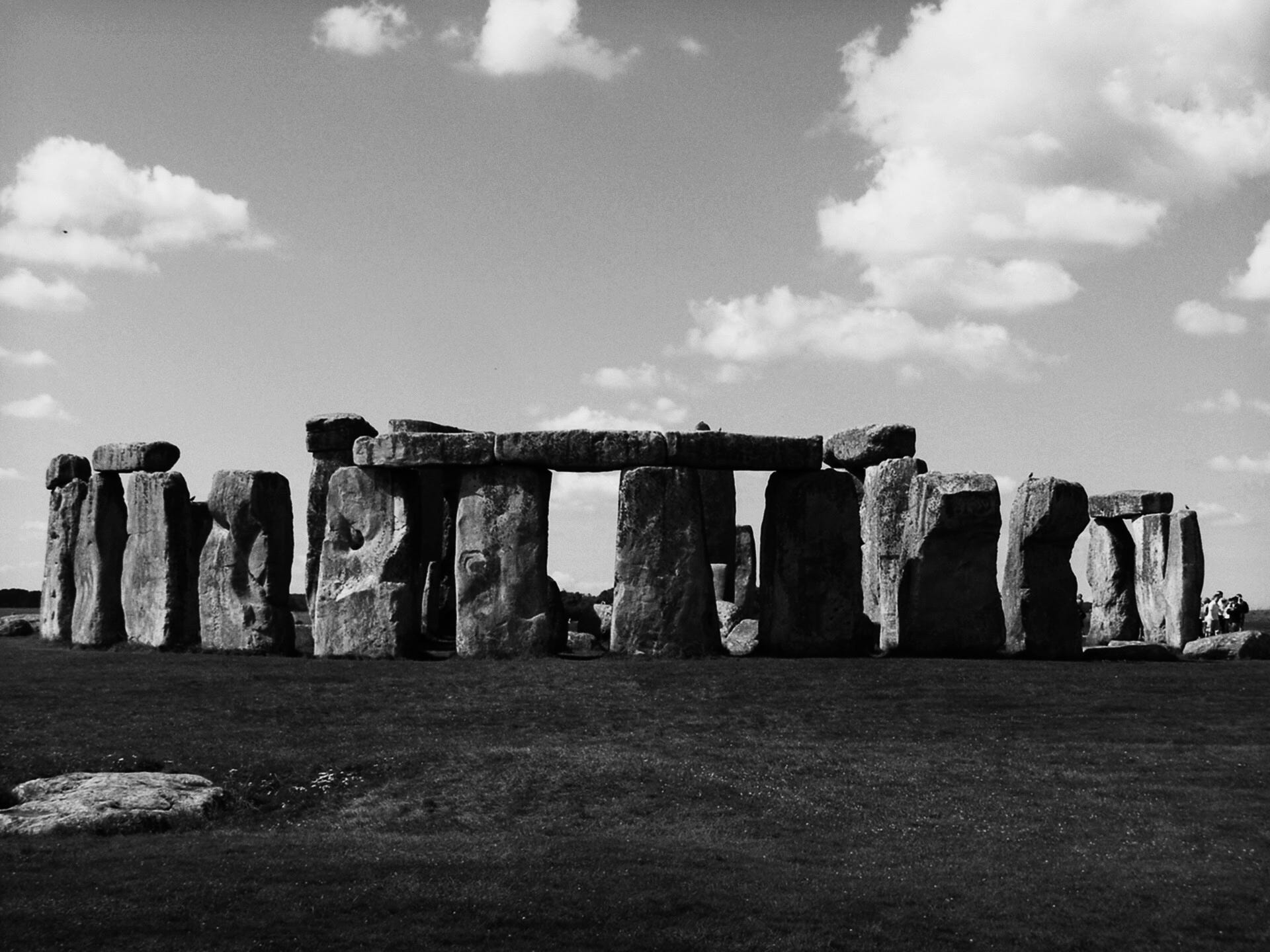
The people of England began constructing Stonehenge: one of the worlds most iconic and recognizable ancient monuments! Stonehenge was used as burial grounds and thus likely also used for ancestor worship. It is also believed to have functioned as a site for various celebrations. (We would love to do a podcast episode on this sometime!)
Domestic horses were introduced to Mesopotamia which brought about key innovations in transportation, including the chariot: a light, two-wheeled horse-drawn vehicle.
Cist burials (stone-lined graves) were performed in some regions, including what is now Ireland.
Shaft graves were constructed in Thebes. These graves were essentially a cist burial but with a roof overtop made of materials like reeds or wood.
The Osiris funerary cult would arise in the popular religion of Ancient Egypt. This movement saw a growth in beliefs regarding the god of the afterlife, the importance of burial rituals, preservation of the dead, and that one might live on eternally in death.
The Mycenaean era in Greece, also known as the Age of Heroes, brings us famous epics like Hercules, the Odyssey, and the Iliad. These stories have held up remarkably well due to themes which are still relatable to us today, but with narratives that also offer insight into the time period in which they were written. (I have to read both the Iliad and Odyssey in my college Humanities class, which I highly recommend!)
Written by Ivy Boyd: anthropology student and co-creator of Odd Anthropology.
The parallel between Osiris funerary practices and the spread of bronze metallurgy is fasinating, both show how material innovations often coincide with shifts in cosmology and ritual. When I studied Ancient Egypt, the timing of these burial refinements alongside metal tech advancemnt suggested societies were simultaneously getting better at preserving physical objects and conceptualizing eternal preservation of identity.